Hey everyone, welcome back to the blog! Last time, we talked about the overall cybersecurity landscape for electric vehicles (EVs). Now, let’s get a little more hands-on and dive into the nitty-gritty of hardware security in EVs. It’s easy to think about software when we talk about vehicle hacking, but the physical components are just as crucial to protect.
Why Hardware Security Matters in EVs
Think of your EV as a giant computer on wheels (because, well, it pretty much is!). All those electronic control units (ECUs) that manage everything from your battery to your brakes are physical pieces of hardware. If a malicious actor can tamper with these components, they could potentially:
- Disable safety features: Messing with the braking system or airbags is a scary thought.
- Steal sensitive data: ECUs store a lot of information, including vehicle identification numbers (VINs), diagnostic data, and even potentially user data.
- Take control of the vehicle: Imagine someone remotely controlling your acceleration or steering – nightmare fuel!
Key Hardware Components to Protect
So, what parts of your EV’s hardware are most vulnerable? Here are a few key areas:
| ECUs (Electronic Control Units): These are the brains of the operation, controlling various vehicle functions. Protecting them from physical tampering is critical. |
 |
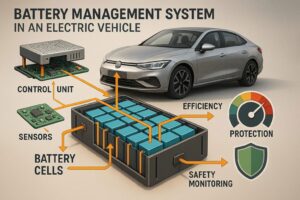
| Battery Management System (BMS): The BMS monitors and controls the battery pack, ensuring safe and efficient operation. Hackers could target this to overcharge, discharge, or even damage the battery. |
 |
| Charging Ports: These are a direct physical interface to the vehicle’s electrical system. Vulnerabilities in the charging port hardware could allow attackers to inject malicious code or compromise the vehicle’s network. |
 |
| The Onboard Diagnostic (OBD-II) Port: Mechanics use this port to diagnose issues, but it can also be a point of entry for attackers if not properly secured. |
 |
How Manufacturers are Beefing Up Hardware Security
The good news is that EV manufacturers are taking hardware security seriously. Here are some of the measures they’re implementing:
- Hardware Encryption: Encrypting data stored on ECUs makes it much harder for attackers to extract sensitive information, even if they gain physical access.
- Secure Boot: This ensures that only authorized software can run on the ECUs, preventing attackers from loading malicious code.
- Tamper Detection: Sensors can detect if someone is trying to physically open or modify an ECU, triggering an alert.
- Physical Hardening: Making the physical components more resistant to tampering and environmental factors.
What You Can Do to Protect Your EV’s Hardware
While manufacturers are doing their part, there are also things you can do to enhance your EV’s hardware security:
- Be wary of aftermarket modifications: Avoid installing unverified hardware or software modifications that could introduce vulnerabilities.
- Use secure charging stations: Stick to reputable charging networks and avoid public charging stations in suspicious locations.
- Keep your software updated: Software updates often include security patches that address hardware vulnerabilities.
- Be aware of physical access: Don’t leave your car unattended in areas where someone could easily tamper with the charging port or other components.
Wrapping Up
Hardware security is a critical aspect of EV cybersecurity. By understanding the potential threats and the measures being taken to mitigate them, we can all contribute to making EVs safer and more secure. Stay tuned for the next post, where we’ll dive into network security within EVs and how data is transmitted!